









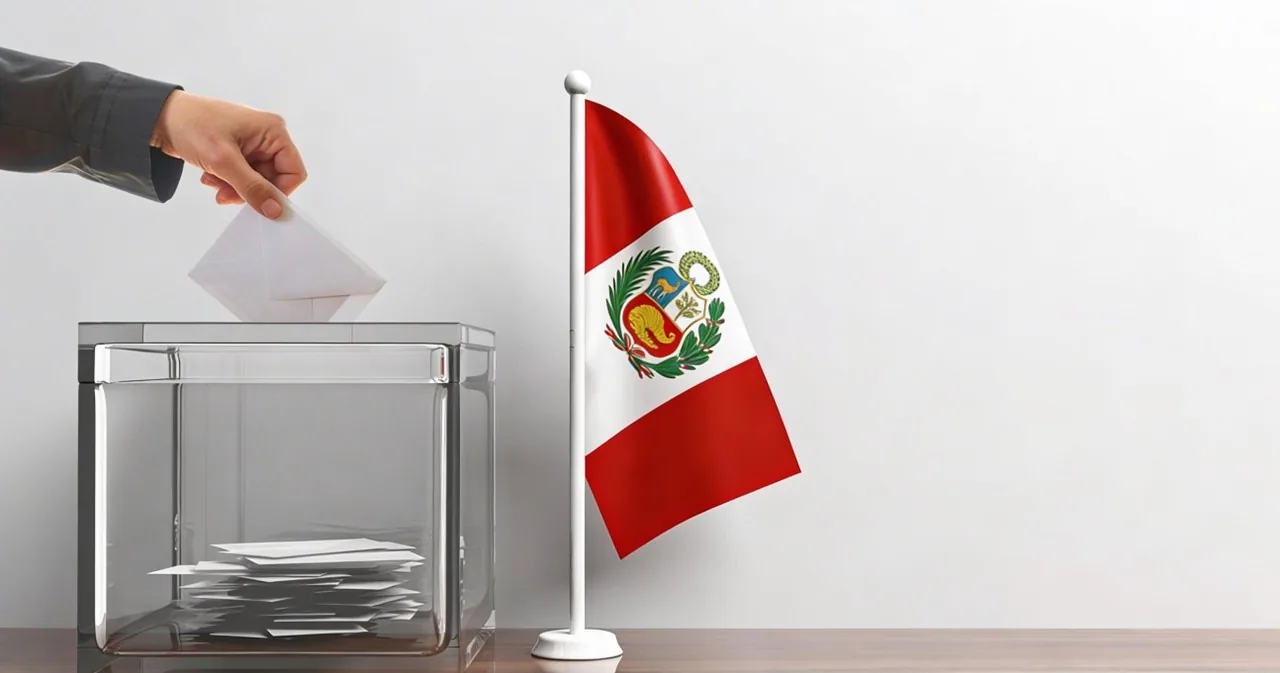
This Sunday, April 12, general elections were held in Peru, with more than 27 million citizens eligible to elect a president, vice presidents, senators, deputies, and representatives to the Andean Parliament. The process also marks the return to the bicameral system and is considered one of the most complex in the country’s recent history.
Read more Uruguay: gambling habits in focus after new national survey
An unprecedented electoral process due to its fragmentation
Peruvians faced the largest ballot in their history this Sunday: the ballot measured more than 42 centimeters wide and more than 40 long, with five columns and the photo and party symbol of each of the 35 presidential candidates. In total, 198 authorities were elected in a single day.
The electoral offering was unusually broad. More than 30 presidential tickets competed in this contest, making this process one of the events with the highest number of candidates in Latin America in recent years.
What the exit poll results say
The country’s two main polling firms delivered their exit poll measurements at the close of the polls. According to the Ipsos Peru poll for Peru21 and Latina Televisión, conducted among 18,144 voters at the exit of voting centers, the top five places were as follows: first place with 16.6%, second with 12.1%, third with 11.8%, fourth with 11.0%, and fifth with 10.7%. The candidates occupying them are, respectively, Keiko Fujimori (Fuerza Popular), Roberto Sánchez (Juntos por el Perú), Ricardo Belmont (Partido Cívico Obras), Rafael López Aliaga (Renovación Popular), and Jorge Nieto (Partido del Buen Gobierno).
Datum Internacional, for its part, released a different result: Keiko Fujimori in first place with 16.5%, Rafael López Aliaga in second with 12.8%, and Jorge Nieto in third with 11.6%. In fourth place was Ricardo Belmont with 10.5% and Roberto Sánchez with 10.0%. The divergence between both polls generated confusion among the citizenry and underscores that the official ONPE results will be decisive in defining who enters the runoff.
When official results will be known
The head of ONPE, Piero Corvetto, announced that the first official results would only be available at midnight on Monday, April 13, with updates every 15 to 30 minutes, and that the 100% count could extend for several days.
Since 6:00 p.m., ONPE enabled its official platform to follow the progress of the count in real time. The system allows consulting not only the figures but also the images of the electoral records, with the aim of strengthening the transparency of the process.
Read more Córdoba: city councilor turns to the courts over lack of information on online gambling
The logistical crisis that conditioned the day
The voting did not proceed without setbacks. The company Servicios Generales Galaga, identified by ONPE as responsible for the delay in the delivery of electoral material, left 211 polling stations uninstalled in three districts of southern Lima: San Juan de Miraflores, Lurín, and Pachacamac, which prevented more than 63,000 citizens from voting.
Faced with this situation, the JNE extended the voting hours by one hour, setting the closing of the polls for 6:00 p.m. The president of ONPE offered public apologies and explained that the measure sought to guarantee the constitutional right to vote. ONPE clarified that the affected centers represented only 0.72% of the more than 10,000 voting locations across the country.
The political context behind the vote
The process takes place at a time of deep institutional instability. Peru arrives at these elections after political turbulence that began a decade ago, with eight presidents in that span, a crisis that has accelerated disenchantment with political parties and normalized presidential changes. Peruvians saw governments start that did not finish and Congress change leaders and decide the country’s fate.
Insecurity and recurring cases of corruption generated citizen fatigue that was reflected in a high intention to vote blank, null, or undecided, which exceeded 35% of the electoral roll according to polls prior to the election.
Why there will be a second round and when it will be
The presidential runoff is scheduled for Sunday, June 7, 2026. This mechanism, known in other countries as a runoff, is activated when no candidate manages to exceed 50% of the valid votes, a situation that previous polls considered practically inevitable due to the fragmentation of the electorate.
This stage will not only define the next president of Peru for the 2026-2031 period but will also test the candidates’ ability to build alliances and capture the support of an increasingly demanding and disenchanted electorate.
Read more Latvia reorganizes gambling and integrates it into the tax system