









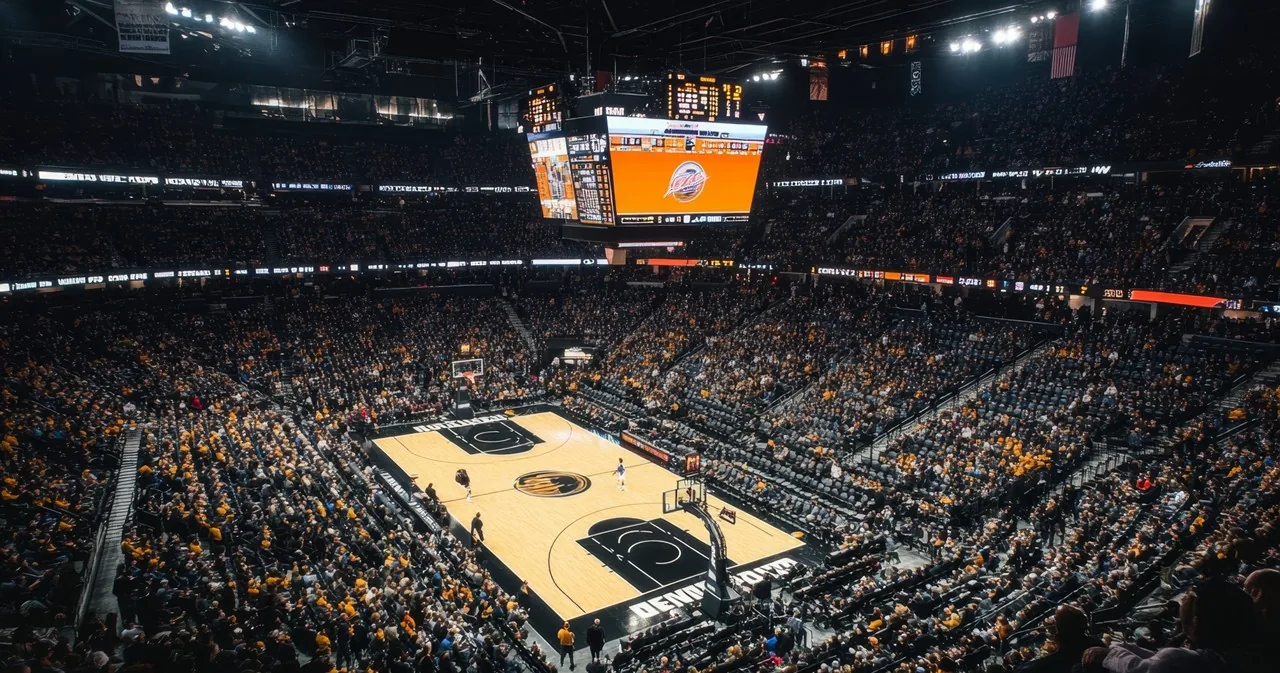
In late March, the 30 governors of the NBA voted in favor of exploring Las Vegas as a possible location for the league’s expansion. The vote was preliminary, and a final decision is expected before the end of the year. Commissioner Adam Silver was clear on the matter: he sees no signs that interest in a Las Vegas franchise will diminish in the short term.
Read more Legal gambling in Colombia: authorities promote its integration into the financial system
However, the path to a permanent franchise is fraught with obstacles. The estimated price of the expansion franchise ranges from $7 billion to $10 billion, a figure that places the project at the top of the sports market. For comparison, the Boston Celtics sold last year for $6.1 billion and the Los Angeles Lakers for $10 billion. This makes the potential Las Vegas franchise a high-risk investment in a market that has not yet proven its ability to permanently sustain an NBA team.
The logistical and financial challenges of settling in Las Vegas
Beyond the franchise price, there are concrete issues to resolve. Initial reports suggest the league would want the team to start playing in 2028, a timeline possibly too tight to build a stadium from scratch. The most viable option would be the T-Mobile Arena, home of the NBA Cup tournament finals, although it would require significant renovations to permanently host regular season games.
Stadium ownership further complicates the picture: it is divided between MGM Resorts, Anschutz Entertainment Group, and Bill Foley, owner of the NHL’s Las Vegas Golden Knights. Foley committed to financing the renovations in exchange for participating in the franchise’s ownership, but that doesn’t guarantee the process will proceed without friction.
The economic impact of adding franchises to the circuit
Expansion also has economic implications for current owners. League revenues are distributed among 30 franchises, and in the last five years, eight of them have changed hands, reflecting a significant renewal in league ownership. Incorporating two new franchises could generate additional revenue, but also dilute existing ones.
The NBA hired PJT Partners to analyze the immediate impact of this potential dilution. If the Seattle and Las Vegas franchises reach a combined value of $15 billion, each current owner would receive $500 million in expansion fees, a sum that would theoretically offset projected losses in broadcast rights revenue, which are around $11 to $14 million annually per franchise. To approve the expansion, 23 out of 30 favorable votes are needed.
The analysis: every event adds up, even if it doesn’t reach a billion dollars
Jeremy Aguero, principal analyst at Applied Analysis and a leading figure in the economic study of Las Vegas, warns that not all events should be measured by the same yardstick as the Super Bowl or the Formula 1 Grand Prix, which are capable of exceeding $1 billion in economic impact.
Read more The illegal market gains ground in the Netherlands and surpasses the regulated sector
“We’re not saying every event has to be a billion-dollar event to be a great event in Las Vegas,” Aguero explained. The analysis is more comprehensive: each event contributes to consolidating the city’s reputation, generating institutional experience, and attracting the next larger-scale event.
Aguero also projects that the 2029 Super Bowl will surpass the 2024 numbers. Part of that optimism is based on the Strip’s hotel expansion: the Hard Rock Las Vegas, with over 3,000 new rooms, will be operational by the end of 2027. Its iconic guitar-shaped tower will reach 688 feet in height, becoming the tallest skyscraper on the Strip. Bally’s also plans a $1.19 billion mixed-use project with an additional 3,000 rooms, though without a defined construction timeline yet.
Las Vegas, a sports market under construction
Las Vegas’ trajectory as a major sports market follows a logic of accumulation. The city built experience with more modest events, such as the Las Vegas Bowl, before scaling up to national championships. This process allows it to reach decisive stages with developed infrastructure, logistics, and sports culture.
“This is the most important stage for college basketball. This is the most important stage for college football. That experience, both for fans and athletes and for the NCAA itself, is really important,” Aguero noted.
If the NBA finally decides to expand to Las Vegas, it will find a city that is no longer just an entertainment destination. It is a sports hub under construction that, event after event, is demonstrating its ability to host the biggest global sporting events.
Read more Online betting in Brazil: survey reveals habits and warns about financial risks