








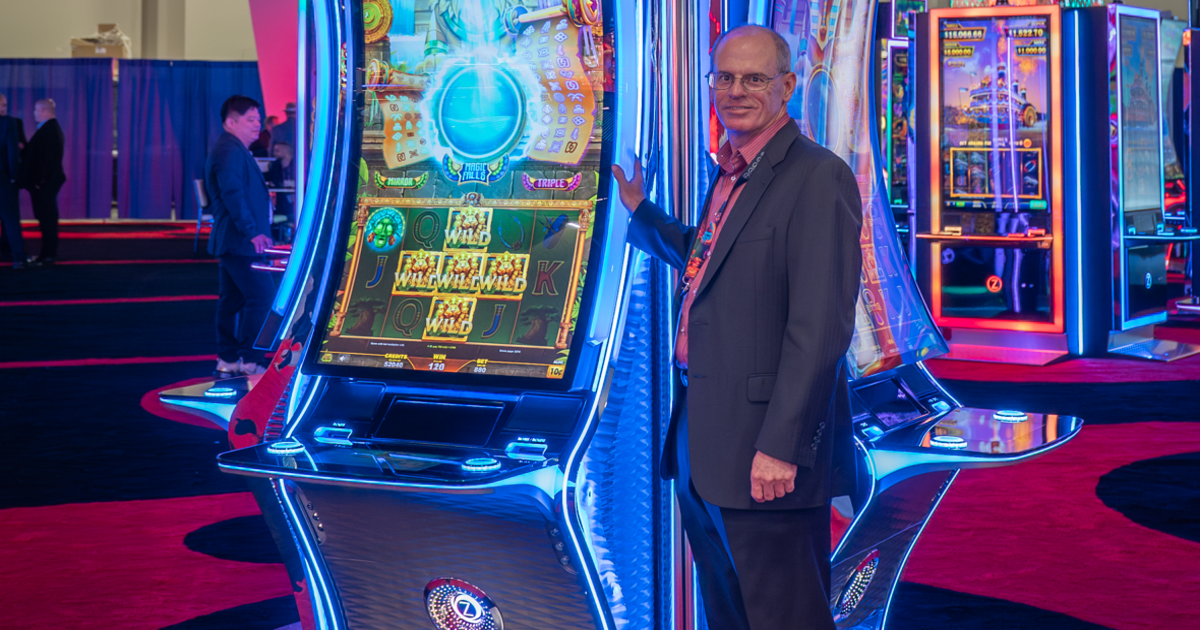
Derik Mooberry, CEO of Zitro USA, shares exclusively with CASINO Magazine the keys to the company’s successful positioning in the competitive United States market.
Read also: Innovation, culture, and closeness: Apuesta Total’s strategy
In this conversation, he addresses the challenges of introducing a brand in a mature market where familiarity is as valued as innovation, and explains how Zitro has achieved this delicate balance by developing products specifically designed for the American gamer.
From hardware design to gameplay mechanics, every element has been carefully adapted to connect with local expectations without losing the brand’s distinctive identity.
Strategy and vision for the U.S. market
- What was the biggest challenge, since you took over as CEO in the US, in positioning Zitro in the US market, and what strategies did you implement to gain the trust of operators?
The main challenge when entering the U.S. market was getting customers to become familiar with our products. When you enter a new market, your products must adapt to what customers expect. In recent years, we have focused on developing products specifically designed for the American user, from hardware design to the software players interact with.
We have sought to combine familiar elements with high-level innovation so that operators and players connect with our games from the first moment.
- You know the DNA of the North American market well. What aspects of American gaming culture most influence product development decisions and commercial strategy?
Our team closely follows the U.S. casino market, monitoring which game mechanics and play styles resonate best with users. We have worked to integrate those familiar mechanics into our games, while adding our own touch to offer a more complete experience. It is that balance between the familiar and the new that keeps players interested and helps consolidate Zitro’s identity in the market.
Portfolio adaptation and player behavior
- The American player seeks innovation, but also familiarity. How does Zitro balance its distinctive signature with the expectations of an audience that values both tradition and novelty?
Balancing innovation with player expectations is a challenge for any manufacturer, and even more so for a new entrant in the U.S. market. Our strategy is to build trust by offering attractive and engaging games. To do this, we must include gaming experiences that are not too far removed from what players are used to. At the same time, small changes can significantly improve the experience, and that is where innovation comes in. The key is to offer games that feel familiar but provide an improved experience.
- What elements (graphics, narrative, or game pace) make the difference in capturing the American player’s attention in the first few minutes of interaction?
No detail can be overlooked in game design. Graphics, titles, colors, mechanics, jackpots, pace, and math are all fundamental. However, the most decisive element is the math and pay structure.
Our teams spend a lot of time studying the best ways to distribute payouts, ensuring that we offer the most entertaining gaming experience. In many cases, we may only have a player’s attention for less than 10 minutes on a machine, so it is crucial to provide an engaging experience in that short period.
Innovation, design, and performance
- Your cabinets are known for their visual impact and high performance. How do you internally manage the balance between aesthetics, technology, and product profitability for the operator?
In the last two years, we have introduced two new cabinet lines that significantly enhance our offering. The CONCEPT cabinet, launched at G2E 2024, was designed to consolidate our position in the *core product* segment and has demonstrated excellent performance over the past year. At this year’s G2E, we presented FANTASY, our most advanced cabinet to date. What sets FANTASY apart is that we have invested heavily not only in the cabinet itself but also in the content, offering an even richer multimedia experience that elevates the gameplay.
Both cabinets feature enhanced lighting, powerful graphics, and immersive sound, elements that connect very well with players. In recent years, we have found that the size and brightness of the cabinet directly influence game performance. It is not surprising that the launch of CONCEPT and FANTASY has significantly improved our results. Ultimately, our goal is to provide operators with products that offer high-level gaming experiences to their players.
- Zitro has grown rapidly in tribal and commercial properties. How different are the two segments, and how do you adapt the value proposition for each type of operator partner?
The tribal and commercial markets in the United States are very similar. As we have expanded into commercial casinos across the country, we have found that games that perform well in tribal casinos also achieve good results in commercial casinos.
Of course, each operator has their own specific needs, but in the end, a good game is a good game. If players like it, it will be successful, whether in a tribal property or a commercial casino. That has truly been the key to our growth in both segments.
Derik Mooberry: “The balance between innovation and familiarity is Zitro’s formula in the United States”
Derik Mooberry, CEO of Zitro USA, shares exclusively with CASINO Magazine the keys to the company’s successful positioning in the competitive US market.
In this conversation, he addresses the challenges of introducing a brand in a mature market where familiarity is as valued as innovation, and explains how Zitro has achieved this delicate balance by developing products specifically designed for the American gamer.
From hardware design to gameplay mechanics, every element has been carefully adapted to connect with local expectations without losing the brand’s distinctive identity.
Strategy and vision for the U.S. market
What was the biggest challenge, since you took over as CEO in the US, in positioning Zitro in the US market, and what strategies did you implement to gain the trust of operators?
Read also: Craig Toner, CEO of Aristocrat Gaming: Sustained growth and future vision
Entering the U.S. market presented a significant challenge: helping customers become familiar with our offerings. When entering a new market, your products must align with what customers already expect. Over the past years, we’ve focused on designing products that are engineered with the U.S. customer in mind, paying attention to everything from hardware design to the software that players engage with while playing the machine.
Our goal has been to combine familiarity with high-quality innovation, so both operators and players feel confident engaging with our games.
You know the DNA of the North American market well. What aspects of American gaming culture most influence product development decisions and commercial strategy?
Our team closely follows the U.S. casino market, carefully monitoring which game mechanics and play styles resonate most with players. We have worked hard to incorporate those familiar mechanics into our games, while adding our own unique twists to deliver an even more enhanced gaming experience. It’s that balance of familiar and new that keeps players engaged and helps establish Zitro’s identity in the market.
Portfolio adaptation and player behavior
The American player seeks innovation, but also familiarity. How does Zitro balance its distinctive signature with the expectations of an audience that values both tradition and novelty?
Balancing innovation with player expectations is a challenge for any manufacturer, and even more so for a new entrant in the U.S market. Our approach is to build trust with casino players by offering games that are both fun and engaging. To do that, we must incorporate play experiences that don’t differ too far from what they are used to playing. However, small changes can significantly enhance the customer experience, and that is where the innovation element comes into play.
If you design games that are too different from what players expect, it will be difficult for you to grow your market share as a small supplier. The key is to create games that feel familiar but deliver an improved experience.
What elements (graphics, narrative, or game pace) make the difference in capturing the American player’s attention in the first few minutes of interaction?
No detail can be overlooked when designing games. Graphics, game titles, colors, play mechanics, jackpot sizes, game pace, and math all play an essential role. However, the most critical element is the math and pay distribution.
Our teams dedicate significant time to studying the best ways to distribute pay, ensuring that we deliver the most entertaining gaming experience to players. In many cases, you may only have a customer’s attention for less than 10 minutes on a machine, so you have to provide a valuable experience during that very short window.
Innovation, design, and performance
Your cabinets are known for their visual impact and high performance. How do you internally manage the balance between aesthetics, technology, and product profitability for the operator?
Over the past two years, we’ve introduced two new cabinet series that significantly enhance our offering. The CONCEPT cabinet, launched at G2E 2024, was created to strengthen our position in the core game product segment and has performed exceptionally well over the past year. At this year’s G2E, we introduced FANTASY, our most advanced cabinet to date. What sets FANTASY apart is that we’ve invested heavily not just in the cabinet itself, but also in the content, delivering a richer multimedia experience that elevates the gameplay.
Both cabinets feature enhanced lighting, powerful graphics capabilities, and immersive sound—elements that players strongly respond to. We have learned over the last few years that there is a correlation between the size and brightness of the cabinet and game performance. It is not surprising that the launch of CONCEPT and FANTASY has significantly improved our overall performance. Ultimately, our goal is to provide operators with products that deliver meaningful gaming experiences to their players.
Zitro has grown rapidly in tribal and commercial properties. How different are the two segments, and how do you adapt the value proposition for each type of operator partner?
The tribal and commercial markets in the US are very similar. As we’ve expanded into commercial properties across the US, we’ve found that the games that work well in tribal casinos also perform well in commercial venues.
Each operator has their own specific needs, of course, but at the end of the day, a great game is a great game. If players love it, it will succeed, whether it’s in a tribal property or a commercial casino. That’s really been the key to our growth in both segments.
Read also: Yuri Guerra, from DGJCMT, gives the keys to 2026: Formalization, surveillance and technology