








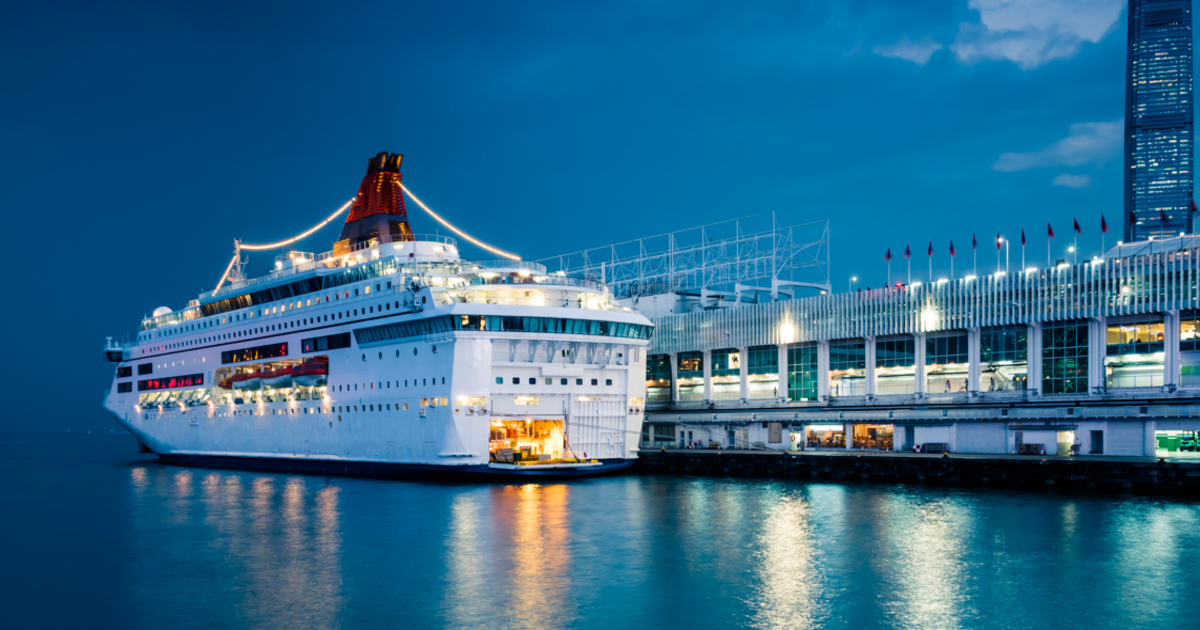
The government of Dominican Republic plans to establish controls over casinos operating on luxury cruise ships that travel through or dock in its territorial waters. The proposal from the Ministry of Finance and Economy stipulates that any first-class vessel with gambling facilities must obtain an official license if it remains in national waters for at least six hours.
The initiative, presented as a draft resolution, is currently undergoing a public consultation period to receive observations and recommendations from various sectors. This measure represents the country’s first regulatory effort specifically targeting the entertainment component of the cruise tourism industry, a sector experiencing notable expansion in the Caribbean region.
Cruise Tourism, a Sector in Accelerated Growth
The numbers support the relevance of this regulation. In 2025, the Dominican Republic received 788 cruise ships carrying nearly 3 million visitors, according to official figures. This volume makes the country a strategic destination for the passenger shipping industry in the region.
The resolution would apply exclusively to first-class vessels, defined as those with a capacity exceeding 2,000 passengers. The document justifies the measure by stating that casinos on cruise ships “can be used as instruments for money laundering and terrorist financing,” making it necessary to apply the same standards that govern gambling halls in luxury land-based hotels.
Cost Structure and Guarantees in the Dominican Republic
The draft details a system of differentiated fees based on the size of the vessel. Cruise ships with a capacity between 2,000 and 3,499 passengers would pay approximately $16,900 for the initial license issuance, while those with 3,500 passengers or more would disburse around $25,400.
Additionally, license holders must present a compliance bond of approximately $338,000 to the Directorate of Casinos and Gambling. This guarantee aims to ensure compliance with the established obligations.
Read also: The Choice starts with BetConstruct AI at ICE Barcelona 2026
The license will be valid for five years and will only permit the operation of one gaming room per ship, with no possibility of transfer to other vessels owned by the same proprietor. Renewal will cost 50% of the issuance fee in effect at the time of application.
Annual Operating Fees
Beyond the initial license, operators face annual payments based on the volume of gaming tables. Casinos with 1 to 20 tables will pay approximately $10,150 per year; those with 21 to 40 tables will disburse about $11,850 annually, and establishments with 41 or more tables will pay close to $13,550.
The scheme includes a limit of 15 entries into national waters per year. Each additional entry will incur a charge of approximately $254. Operators must make these payments to the National Treasury when submitting the application, either in Dominican pesos or US dollars.
Inflation Adjustments
An additional element of the draft establishes that all fees will be automatically adjusted according to the Consumer Price Index (CPI), with 100% indexing. This mechanism ensures that the amounts maintain their real value over time.
The proposal now awaits the public feedback process before its eventual approval, which would set a precedent in the regulation of maritime entertainment in the Caribbean.
Read also: ICE Barcelona 2026 premieres Casa Brasil and expanded agenda for Latin America