









We live in a globalized world, where digital content is constantly consumed, through platforms or mobile applications, thus giving rise to new behaviors and perspectives on life and entertainment. In this new ecosystem, not only the youth sector plays a fundamental role, but also the Boomer, Generation X, and Millennial generations.
Read also: Brazil: The Senate debates the regulation of “fantasy games”
In The estate of gaming marketing of AppsFlyer, a mobile marketing analytics and attribution platform, for example, it was announced that among the preferred categories by users were games through mobile applications, a sector that saw exponential growth (22%) compared to 2020.
“An impressive feat considering the peaks of the initial lockdowns, which shows that the pandemic played a key role in introducing games to the masses,” the company detailed.
ECONOMIC BASES
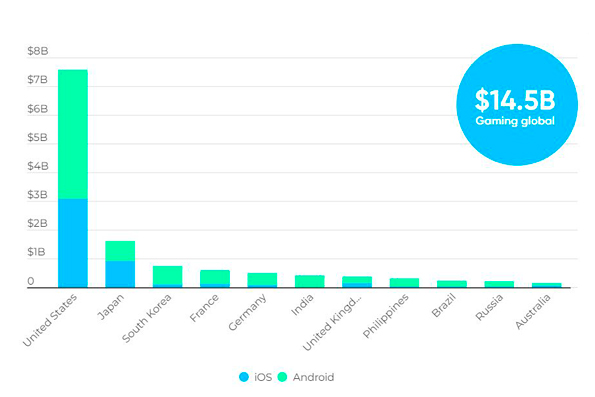
According to App Annie, consumer spending on gaming apps increased by 16% last year, reaching $116 billion worldwide. This preference served as an important window for marketers and companies in the sector and outside of it, who invested —in 2021— more than $14.5 billion in user acquisition globally.
“In January 2022 alone, we saw the record acquisition of Activision Blizzard by Microsoft for $68.7 billion, the acquisition of Zynga for $12.7 billion by Take-Two, and the acquisition of Bungie by Sony for $3.6 billion, all testaments to the great scale of gaming today,” the study added.
In this context, Carlos Alberto Torres, regional marketing manager Spanish LatAm of AppFlyer, recommended that specialists in the field should prepare so that campaigns and investments bear fruit in transforming players into loyal users.
ANDROID VS IOS
Definitely, operating systems played an important role in player preference. Therefore, 10% of user acquisition (UA) budgets shifted from iOS to Android in 2021.
That is, since Apple implemented its app tracking transparency framework, it now faces a major challenge in generating the same return on advertising investment. In this regard, Android is currently the best platform.
“Privacy changes led to a year-on-year drop of 13% in iOS versus an increase of 35% in Android; overall, UA spending increased by 18% in 2021,” the analysis detailed.
Read also: Brazil: The Senate debates the regulation of “fantasy games”
LATIN AMERICAN APOGEE
In Latin America, a significant boom in game downloads has been observed. For example, the iOS operating system saw an increase in Hyper Casual. Specifically, they doubled during 2021.
“Retaining users after a month is not an easy task in the rapidly evolving gaming ecosystem. And yet, casual Spanish-language games have an average 30-day retention of 7.6% in Latin America, demonstrating their staying power,” the study detailed. Regarding the Android system, especially in Mexico, an average growth of IAP (in-app purchases) of 52% was seen across all game subcategories; however, the scenario was different in Brazil, where the numbers were not favorable.
“The CPI for casual games in Brazil increased by 30% in the fourth quarter, compared to the first quarter, triple the average rate among other genres,” they added.
KEY POINTS
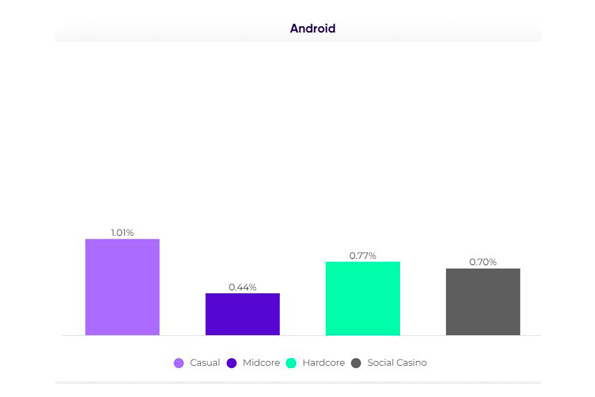
Among the conclusions reached in The estate of gaming marketing are that companies must deeply understand their users, know under which systems they download games to better direct their strategies.
Likewise, they pointed out that among the alternatives to compensate for what is happening with iOS, one can consider web platforms, Android, Amazon, PC, console, and even Oculus, a company dedicated to virtual reality. In turn, they recommended exploring markets beyond the United States, due to the saturation of the industry in this part of the globe.
“For example, games created for the Vietnamese market have a potentially much lower installation cost per acquisition and have the added benefit of higher app tracking and subscription rates,” they added.
Markets such as India, Brazil, Indonesia, and Eastern Europe are some of the examples cited in the research. Finally, they advised implementing live operations; that is, leveraging platforms such as Facebook, WhatsApp, push notifications, bots, SMS, among others, to improve the player experience, also understanding that each of these platforms has a different way of being managed.
Read also: A Dream Competition: Challenging the Possible in Fantasy Leagues