









Generation Z, also known as centennials, post-millennials, or iGeneration, refers to individuals born approximately between the mid-1990s and mid-2010s.
Read also: Digital Marketing in the Gaming Era: Personalizing the Experience as the Core
They have grown up in a fully connected environment and have experienced significant social, technological, and cultural changes since their childhood. What Gen Z thinks and how they consume.
Values and attitudes: diversity, inclusion, and equity
Social awareness and activism on issues such as climate change, LGBTQ+ rights, and social justice are very important to Gen Z. They want to make an impact in the community they live in and are therefore conscious of what they buy.
The Deloitte 2022 Gen Z and Millennial Survey found that one-third of Gen Z respondents are primarily concerned about the cost of living, 45% live from paycheck to paycheck, and over a quarter express doubt about having a comfortable retirement.
At the same time, they are demanding and impatient consumers. They are hyperconnected and have limited attention spans. Therefore, they are unlikely to pay attention to lengthy advertisements or long videos.
However, once their basic needs for food and shelter are met, centennials seek a sense of belonging. When organizations that employ them or services they use align with their values, they connect better with them and receive a relative level of loyalty in return.
Technology and connectivity: It’s not all about TikTok for centennials
It is often said that they are the generation born into the digital era
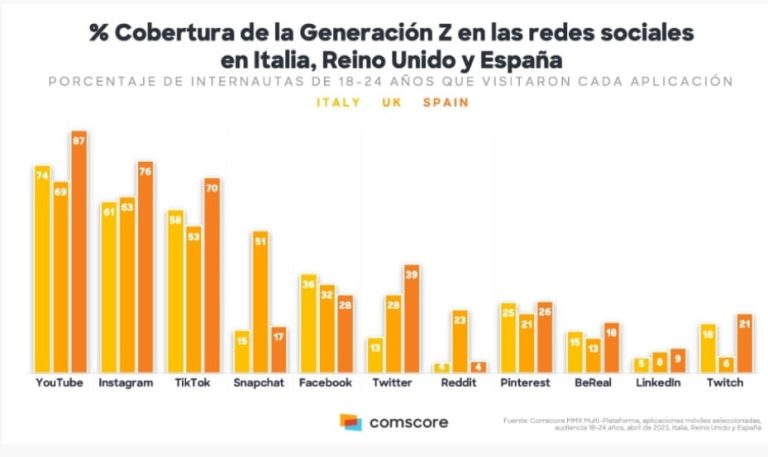
Still, their attention is not solely limited to TikTok. According to a Comscore survey on centennials’ social media consumption in Spain, Italy, and the United Kingdom, the YouTube mobile app ranks as the leader in all three countries, with the highest presence in Spain (87%).
Instagram also demonstrates solid performance, with a presence of over 60%. On the other hand, Snapchat and Reddit, while popular in the United Kingdom with presences of 51% and 23% respectively, have significantly lower presence in Italy and Spain.
As for Twitter, Twitch, and BeReal, they are more popular among Gen Z in Spain compared to the other two countries.
The “side hustle” culture
While young people of all generations have worked multiple jobs during college and early in their careers, members of Generation Z are taking the work hustle into their formal careers.
According to a 2022 survey by payroll company Paychex, approximately half of Gen Z is employed in two or more places, compared to a third of millennials and baby boomers.
As Gen Z enters the workforce in significant numbers, it is clear that they are departing from the traditional 9-to-5 career path and reinventing their own ways to earn income.
Furthermore, a global survey conducted in February by data analytics firm Kantar revealed that 40% of surveyed Gen Z workers combine at least two roles due to living expenses.
Moderate career expectations: They don’t buy into the narrative
The idea sold to Generation Z was that if you found a good job and worked hard, you would reap the rewards. However, after witnessing millennials’ dream fade away, Gen Z is not buying into what they view as a broken social contract.
As more Gen Z individuals enter the workforce, companies need to adapt to their mindset. In the past century, an attractive career focused on competitive salaries and prestigious positions.
Read also: Ainsworth and Grupo Orenes sign an agreement to market Ainsworth in Spain
However, in today’s world, self-fulfillment has become the symbol of status in the 21st century, rather than just monetary gain.
Santor Nishizaki, author of the book “Working with Gen Z: A Guide to Recruiting,” points out that if companies do not provide opportunities for learning, contribution, and growth, employees will channel their energy into side projects or even other jobs.
In conclusion, centennials have witnessed a rapid and constant evolution in technology and society, shaping their unique identity and perspectives. Their ability to adapt to change, focus on inclusion, and entrepreneurial mindset are significantly impacting the current society.
Understanding this generation is crucial to adapt and anticipate future trends in various aspects of social, economic, and cultural life.
Centennials: the digital generation that is changing everything
Generation Z, also known as centennials, post-millennials, or iGeneration, refers to individuals born approximately between the mid-1990s and mid-2010s. They have grown up in a fully connected environment and have experienced significant social, technological, and cultural changes since their childhood. Gen Z’s values and attitudes are focused on diversity, inclusion, and equity. Social awareness and activism on issues such as climate change, LGBTQ+ rights, and social justice are very important to Gen Z. They want to make an impact in the community they live in and are conscious of their purchasing choices.
The Deloitte 2022 Gen Z and Millennial Survey found that one-third of Gen Z respondents are primarily concerned about the cost of living, 45% live from paycheck to paycheck, and over a quarter express doubt about having a comfortable retirement. At the same time, they are demanding and impatient consumers. They are hyperconnected and have limited attention spans. Therefore, they are unlikely to pay attention to lengthy advertisements or long videos.
However, once their basic needs for food and shelter are met, centennials seek a sense of belonging. When organizations that employ them or services they use align with their values, they connect better with Gen Z and receive a relative level of loyalty in return.
Technology and connectivity: It’s not all about TikTok for centennials
It is often said that they are the generation born into the digital era. However, their attention is not solely limited to TikTok. According to a Comscore survey on centennials’ social media consumption in Spain, Italy, and the United Kingdom, the YouTube mobile app ranks as the leader in all three countries, with the highest presence in Spain (87%). Instagram also demonstrates solid performance, with a presence of over 60%. On the other hand, Snapchat and Reddit, while popular in the United Kingdom with presences of 51% and 23% respectively, have significantly lower presence in Italy and Spain. As for Twitter, Twitch, and BeReal, they are more popular among Gen Z in Spain compared to the other two countries.
A «side hustle» culture
While young people of all generations have worked multiple jobs during college and early in their careers, members of Generation Z are taking the work hustle into their formal careers. According to a 2022 survey by payroll company Paychex, approximately half of Gen Z is employed in two or more places, compared to a third of millennials and baby boomers. As Gen Z enters the workforce in significant numbers, it is clear that they are departing from the traditional 9-to-5 career path and reinventing their own ways to earn income.
Furthermore, a global survey conducted in February by data analytics firm Kantar revealed that 40% of surveyed Gen Z workers combine at least two roles due to living expenses.
Moderate career expectations: They don’t buy into the narrative
The idea sold to Generation Z was that if you found a good job and worked hard, you would reap the rewards. However, after witnessing millennials’ dream fade away, Gen Z is not buying into what they view as a broken social contract. As more Gen Z individuals enter the workforce, companies need to adapt to their mindset. In the past century, an attractive career focused on competitive salaries and prestigious positions. However, in today’s world, self-fulfillment has become the symbol of status in the 21st century, rather than just monetary gain.
Santor Nishizaki, author of the book «Working with Gen Z: A Guide to Recruiting,» points out that if companies do not provide opportunities for learning, contribution, and growth, employees will channel their energy into side projects or even other jobs.
In conclusion, centennials have witnessed a rapid and constant evolution in technology and society, shaping their unique identity and perspectives. Their ability to adapt to change, focus on inclusion, and entrepreneurial mindset are significantly impacting the current society.
Understanding this generation is crucial to adapt and anticipate future trends in various aspects of social, economic, and cultural life.