









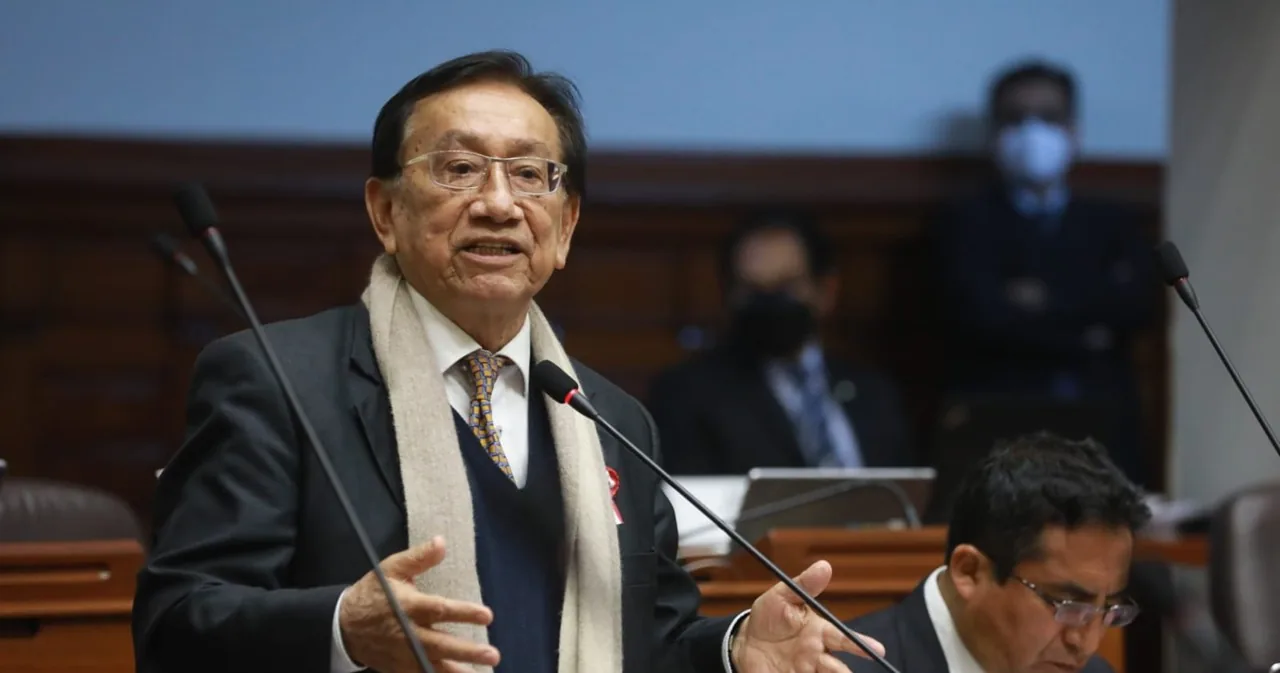
On Wednesday, February 18, 2026, the Plenary of the Congress of the Republic elected José María Balcázar, a congressman from Perú Libre, as the new interim president of Peru. In an extraordinary session that lasted until after midnight, Balcázar won in the second round against the Acción Popular candidate, María del Carmen Alva, with 64 votes to 46. With this appointment, the country adds its eighth leader in less than ten years, an unprecedented figure in Latin America that reflects the structural fragility of its political system.
Read also: Macao starts the Chinese New Year with a strong influx of tourists
Why José Jerí was censured and how this election was reached
The day was a direct consequence of the censure approved on Tuesday, February 17, against José Enrique Jerí Oré, who had been serving as President of the Republic since October 10, 2025, through constitutional succession, as head of the Congressional Board. The Plenary approved his removal with 75 votes in favor, 24 against, and 3 abstentions, after he had served for just 130 days.
The seven motions of censure filed against Jerí pointed to alleged meetings not institutionally registered with businessmen of Chinese origin Zhihua Yang and Ji Wu Xiadong, who reportedly had active business with the Peruvian state. Congressmen argued that these meetings constituted a scenario of influence peddling and illegal sponsorship.
To these accusations were added questions about alleged irregular hiring of people linked to these businessmen within the Executive Branch, visits to the Government Palace by individuals with active fiscal files, and the extension of the concession for the Matarani port terminal in favor of the company Tisur, which reportedly created monopolistic conditions in alleged violation of Articles 58 and 61 of the Constitution. Growing citizen insecurity during his administration completed the political picture that motivated the removal.
Who competed for the presidency
With Jerí’s vacancy formally declared, Parliament called for an extraordinary plenary session for Wednesday the 18th at 6:00 p. m. Four lists were presented to the Congressional Secretariat.
List 1, from the Honor y Democracia caucus, nominated Héctor Acuña. List 2, from Acción Popular, presented María del Carmen Alva, who had already presided over Congress between 2021 and 2022. List 3, promoted by the Bloque Democrático Popular, ran Édgar Reymundo as a candidate, who publicly denounced the existence of “repartija” agreements among the main political forces. List 4, from Perú Libre, registered José María Balcázar, a lawyer from Cajamarca, former Supreme Court magistrate, and congressman in his first parliamentary experience.
How the voting went: first and second rounds
The voting was in person and by physical ballot, in accordance with the Congressional Regulations, without the possibility of virtual participation. The 117 votes cast in the first round yielded the following results: Héctor Acuña obtained 13 votes, María del Carmen Alva reached 43, Édgar Reymundo got 7, and José María Balcázar achieved 46. There was also 1 blank vote and 7 null votes. Since no candidate reached the required majority of 59 votes, the two most-voted lists moved to the second round.
Read also: Nigeria faces a regulatory standoff as the sector awaits greater stability
In that decisive instance, Balcázar won with 64 votes against Alva’s 46, in a vote out of 113 ballots cast. The result surprised many analysts, who had projected a victory for the Acción Popular candidate. The key lay in the support Balcázar garnered beyond his own caucus: he received explicit backing from Alianza para el Progreso and Podemos Perú, as well as votes from a faction of Fuerza Popular, which ended up being decisive. Meanwhile, the Bloque Democrático Popular withdrew from the second round and did not participate in the final definition.
Who is José María Balcázar, the new president of Peru
Balcázar is an 83-year-old lawyer from Cajamarca with a long career in the Peruvian judicial system. He served as a permanent judge and provisional member of the Supreme Court of Justice, although his judicial career ended controversially: the then National Council of the Magistracy dismissed him for “serious functional misconduct,” considering that he annulled a final resolution, violating the principle of res judicata. He arrived in Congress in 2021 as a representative of Perú Libre, the same party that brought Pedro Castillo to power.
His election generated mixed reactions. Right-wing and center-right sectors expressed alarm over the return of Perú Libre to the Executive, while the business association Comex Perú publicly recommended that the new president maintain the cabinet formed during Jerí’s administration, making only the strictly indispensable changes to preserve economic continuity in an election year.
What comes next for Peru
Balcázar will lead the State until July 28, 2026, the date on which the government elected in the general elections on April 12 will take office. His administration will start in a context of high parliamentary fragmentation, an election campaign in full swing, and a citizenry with accumulated distrust toward the political class.
The succession revives the debate on the stability of the Peruvian presidential system. Since 2016, the country has gone through the governments of Pedro Pablo Kuczynski, Martín Vizcarra, Manuel Merino, Francisco Sagasti, Pedro Castillo, Dina Boluarte, José Jerí, and now José María Balcázar, most of them under mechanisms of early exit from power. Of the eight presidents Peru has had in this period, only two reached office through direct election by the citizenry, which shows that the crisis is not episodic but a structural characteristic of the country’s political system.
Read also: Brazil: online betting and weight-loss drugs reduce the family budget for basic products