








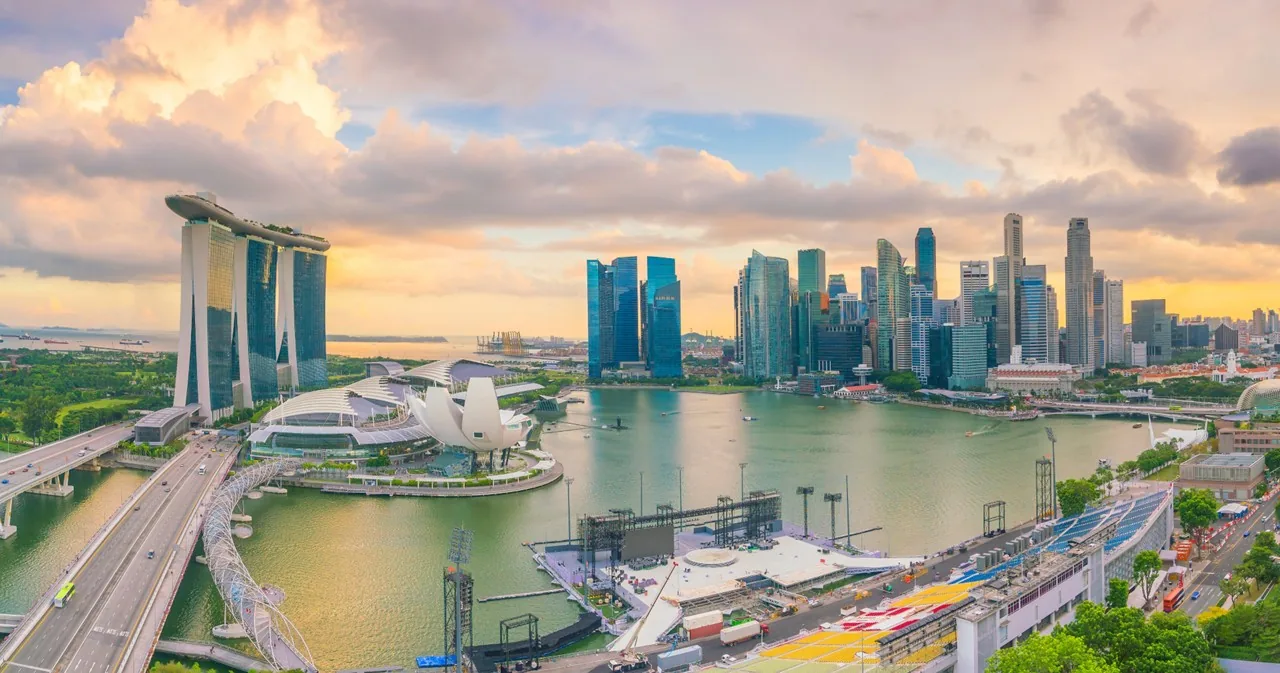
The two integrated resorts in Singapore (Marina Bay Sands and Resorts World Sentosa) ended 2025 with combined gaming revenues exceeding $5.200 million dollars, up 24% from the previous year, consolidating the country as Asia’s leading gaming destination.
Read more Louisiana seeks to ban prop bets and live micro-betting
Gross gaming revenue (GGR) generated by Singapore‘s only two legal casinos reached S$7.050 million in 2025, equivalent to approximately $5.200 million dollars. This result represents a 24% increase over the previous year and constitutes the best performance recorded since the duopoly between Marina Bay Sands (MBS) and Resorts World Sentosa (RWS) began operating in 2010, according to data published by Gaming Intelligence.
The growth was not due to an isolated factor. The sustained recovery of international tourism, the return of high-net-worth travelers from China and Southeast Asia, and the improvement in the offerings of both properties contributed to demand reaching unprecedented levels. In the first nine months of the year, a 23% year-on-year increase had already accumulated, anticipating a year-end of historic proportions.
Marina Bay Sands led the market with unprecedented results
The year’s main highlight belonged to Marina Bay Sands, the flagship resort of Las Vegas Sands (LVS). In the fourth quarter alone, the property recorded net revenues of $1.600 million dollars, up 41% from the same period the previous year, while casino revenues rose 52% to $1.200 million dollars.
The property’s adjusted EBITDA reached $806 million dollars in that quarter, with a margin exceeding 50%. LVS Chairman and CEO Rob Goldstein called the period the most significant quarter in the history of hotel-casinos worldwide. The transformation of MBS’s hotel inventory—which expanded its suites from 180 to 775 premium units—was cited as one of the determining factors behind these results.
The property’s positioning as a luxury destination for the high-value segment has consolidated its competitive advantage in the region. New accommodation options and differentiated services place MBS as a benchmark for luxury hospitality in Asia, in a context where high-end tourism spending on the continent continues its structural expansion.
Resorts World Sentosa moved forward with an ambitious renovation plan
The situation at Resorts World Sentosa was more moderate, although it remained a key player in the local market. The property, operated by Genting Singapore, is in the midst of executing a renovation and expansion project valued at $5.300 million dollars, known as RWS 2.0. In the third quarter of 2025, its total revenues grew 16% year-on-year to S$649,8 million, with casino revenues rising 22% to S$402,3 million.
However, industry analysts noted that RWS’s market share in Singapore remained around 28%, at low levels compared to MBS’s sustained growth. Despite this, the opening of new attractions—including a theme park, an oceanarium, and a luxury hotel—allowed for a rebound in visitor numbers and non-gaming revenue, which grew 7% year-on-year.
Read more Colorado advances in online sports betting regulation with new
The renovation is organized around four strategic pillars: entertainment, hospitality, lifestyle, and marine discovery. The goal is to transform Sentosa Island into a long-stay destination rather than just a day-trip visit, a change that company executives project as a medium-term value generator.
Singapore’s regulatory model balances revenue and social responsibility
One of the features that distinguishes Singapore on the global gaming map is its regulatory model. The country operates with a duopoly controlled by the Gambling Regulatory Authority (GRA), which imposes strict conditions on operators. Local residents must pay a fee of S$150 per day or S$3.000 annually to access the casinos, a measure aimed at reducing the risk of problem gambling behavior.
According to an analysis by Morgan Stanley, integrated resorts contribute approximately 1,5% of Singapore’s gross domestic product, generate around 22.000 direct jobs, and support another 40.000 positions in related sectors. Since their opening, both properties have accumulated a combined EBITDA of over $30.000 million dollars. Despite recent tax adjustments, the two operators committed to investing an additional $14.000 million in the coming years, reflecting the industry’s confidence in the strength of the local market.
The future of the sector in Singapore depends on diversification
The exceptional performance of 2025 raises a fundamental question for the sector: is this growth rate sustainable? Evidence suggests that the answer will largely depend on the ability of both properties to diversify their revenue sources beyond gaming tables.
Marina Bay Sands has consistently moved in this direction, with an entertainment, dining, and hospitality offering that makes the resort a destination in its own right. Resorts World Sentosa is following the same path with its renovation plan, albeit with greater urgency given the regulatory scrutiny it faces.
Singapore’s model (a heavily regulated duopoly integrated into a high-value tourism strategy) has proven to be one of the most profitable and resilient in the world. The 2025 results confirm this and, at the same time, raise expectations for the years to come.
Read more Colombian lotteries reinforced the health system’s funding