








Las Vegas is often represented in a single image: the Strip, with its themed hotels, iconic casinos, and large-scale shows. However, north of the city lies another story. Fremont Street, known in the 1950s as the “Glitter Gulch” for its dazzling display of neon lights, was the stage where Las Vegas built its identity as the capital of gambling and entertainment. Some of the first casinos that became an essential part of its culture were built here.
Read also: United Arab Emirates: Ras Al Khaimah aims to become the new gaming tourism destination
As the decades passed, Fremont’s sparkle was overshadowed by the expansion of the Strip. Larger hotels, resorts with thousands of rooms, and an offering that attracted tourists shifted the focus southward. Fremont was relegated to a nostalgic memory, but time, and above all, technological innovation, changed its course.
THE TECHNOLOGICAL RENAISSANCE
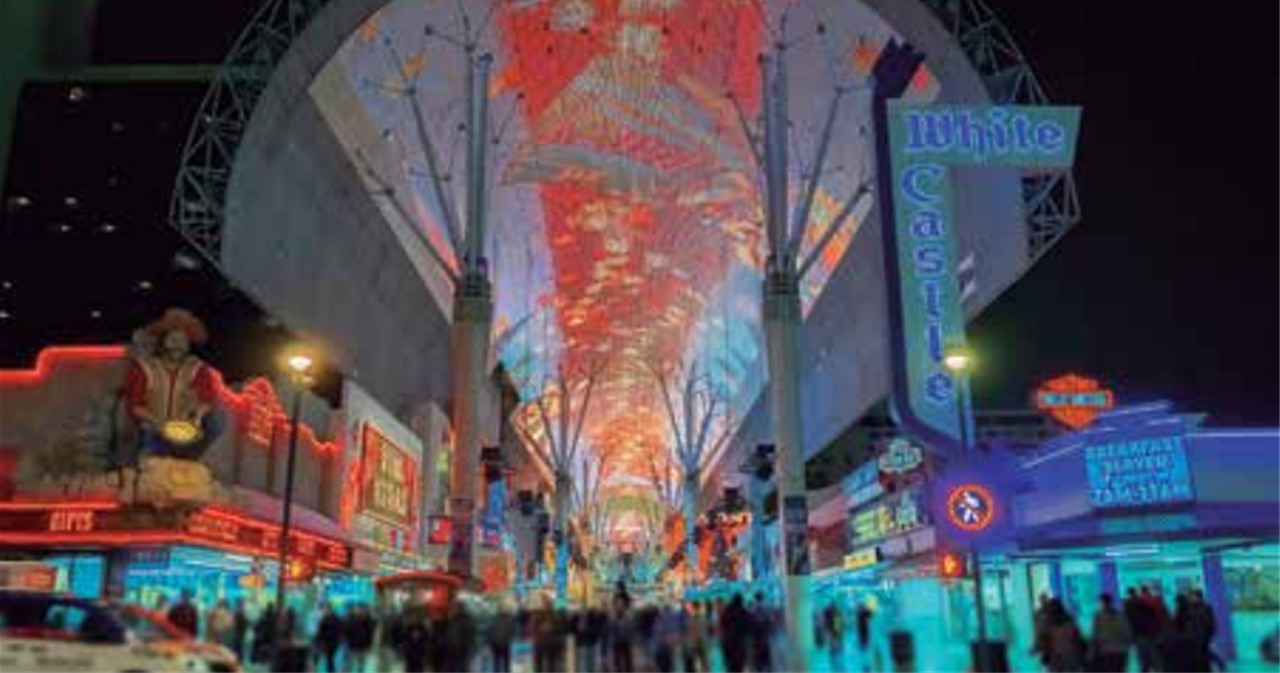
The reinvention began in the 1990s with the inauguration of Fremont Street Experience, an ambitious project that sought to restore the city center’s prominence. The centerpiece was an LED screen covering almost 500 meters of the pedestrian street, creating a digital sky where lights and music synchronized in immersive shows.
In the last decade, that infrastructure has been completely renovated. Today, over 16 million pixels illuminate the boulevard in high-definition resolution, accompanied by a surround sound system that turns every visit into a multisensory spectacle.
Visitors can also interact through mobile applications from which they can choose songs, synchronize experiences, or access exclusive content.
THE TOURIST AS THE PROTAGONIST
Fremont’s new phase is not limited to brighter lights. The district has incorporated augmented reality tools that allow visitors to interact with the urban space. Through applications, they can discover themed routes, participate in real-time trivia, or unlock digital content that integrates with the physical environment.
This gamified tourism model responds to a global trend where travelers seek unique and personalized experiences, where technology amplifies the experience. Fremont offers precisely that: a walk that combines history and modernity, where every corner can become a point of interaction.
The street, once defined by its density of casinos, now stands as an open-air digital ecosystem. In this space, the tourist ceases to be a passive spectator and becomes the protagonist.
Read also: European temples of chance
Another aspect that distinguishes Las Vegas from other destinations is that gambling always occupies a central place. In Fremont, the tradition of casinos has a strong push towards digitalization. Several properties have begun to implement cashless gaming systems, integrating electronic wallets and instant payment options.
The experience also incorporates hybrid platforms that allow players to interact via mobile with certain dynamics of the physical casino. For example, visitors can pre-load funds in an app, receive digital bonuses that are activated on machines in the hall, or participate in cross-promotions between the online and physical environments.
This advancement responds to a new user profile, younger and accustomed to technological immediacy. Fremont thus becomes a laboratory where physical and digital gambling converge naturally.
CULTURE, ART, AND COMMUNITY
However, Fremont’s transformation cannot be explained by technology alone. The renaissance is also fueled by a cultural and community movement. The murals that decorate the facades, the gastronomic offerings that rescue local flavors, and the spaces dedicated to live music have woven a unique ecosystem.
This balance has allowed Fremont to attract a diverse audience: from curious tourists seeking a different experience from the Strip, to residents who find a sense of belonging in the downtown area. Instead of competing directly with the Strip, Fremont has created a complementary narrative, closer and with a strong component of authenticity.
The sum of these elements—state-of-the-art LED screens, augmented reality experiences, digital betting, and a cultural environment—consolidates Fremont as a smart district. It is a model of urban management that integrates technology, entertainment, and community in a single space, anticipating the future of tourism in Las Vegas.
While the Strip continues to represent glamour and monumentality, Fremont offers another narrative: that of a city that learns to reinvent itself, connecting its historical legacy with the demands of a more digital, more conscious, and more participatory traveler.
Read also: Dominican Republic promotes regulation of casinos on cruise ships