








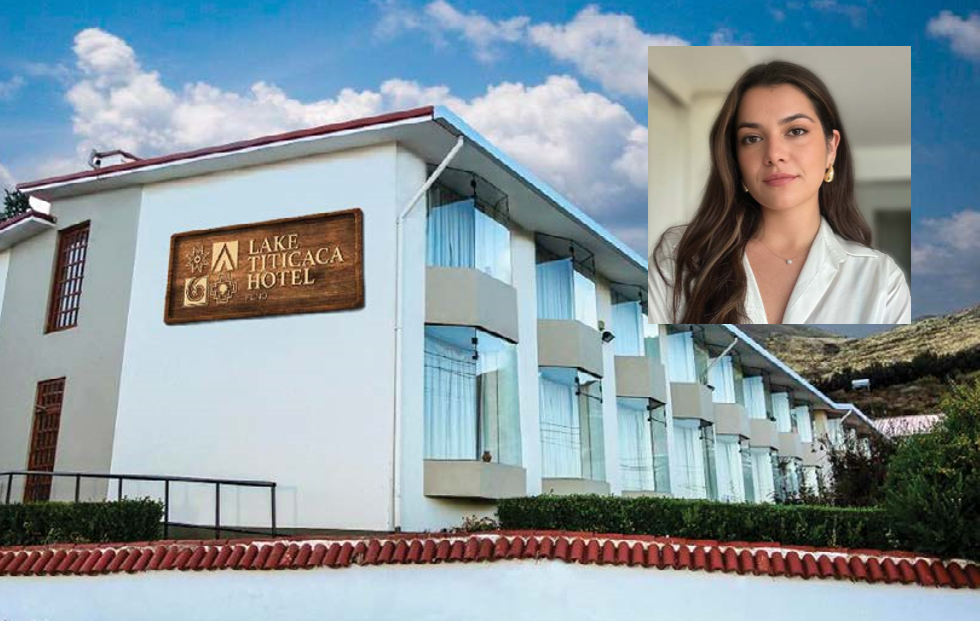
Constructora Concepción S.A.C. ventured into Puno’s hotel sector with the Lake Titicaca Hotel, a project motivated by the region’s cultural and natural richness. In an interview with CASINO magazine, Catalina Rosenberg, general manager of Lake Titicaca Hotel, believes that Puno, with its unique destinations, presents high growth potential following economic stabilization. She also projects growth in occupancy and profitability, supported by a gastronomic offering that highlights local products and partnerships with artists and cooperatives.
Read also: La Huaca Pucllana, the pre-Hispanic heart of Lima
How did Constructora Concepción S.A.C.’s project to enter the hotel industry come about?
The interest in venturing into the hotel industry arose from the destination itself: Puno. From the textiles and embroidery of Taquile, the mysticism of Lake Titicaca, and local food production, to the meteorological phenomena occurring in the area, we sought to enter the hotel sector motivated by exporting the region’s culture and bringing it into the national and international spotlight.
How did you identify Puno as a suitable place for investment and business opportunities, despite the region’s economic contraction in 2023?
We identified that Puno has tourist destinations that do not exist anywhere else in Peru. Noticing a stabilization of the region’s socio-political climate and the desire of local people to boost tourism and commerce in the area again, we found high growth potential after the economic contraction. As Lake Titicaca Hotel, we decided to bet on Puno and also be a player in the department’s economic recovery.
We aim for our hotel activity to also generate economic and commercial movement for the various sectors of the region. Furthermore, to be a showcase of local culture and traditions, meaning to display local production and for it to be an attraction in itself.
When did Lake Titicaca Hotel begin operations, and what sets it apart from the competition?
A little over a year ago, we acquired the property, maintaining the operation of the chain that was previously the owner. In 2024, our own operation began under this new brand, Lake Titicaca Hotel. The team is made up of young professionals who entered the hotel industry to create a distinct and disruptive offering. Lake Titicaca Hotel stands out because, beyond offering comfortable stays and quality services, we are a showcase for everything the region has to offer. Our purpose is to exhibit, enhance, and preserve the local culture, products, art, traditions, flora, fauna, and worldview.
What cultural and entertainment experiences does Lake Titicaca Hotel currently offer? Do you plan to include more in the future?
Currently, we offer non-traditional tours with a focus on experiential activities in conjunction with a local agency allied with the hotel. These include visits to Chimú Island, Sillustani cultural site, the Aymara Route, which includes visits to armu muro and waru waru, among others.
We are working to continue realizing our purpose within the establishment, preparing for the relaunch of our restaurant, where we aim to feature a menu with at least 60% products from local cooperatives. Additionally, we are already in discussions with local artists and cultural groups to transform the hotel into a gallery and cultural center.
Visits to the Titicaca National Reserve grew by 102.9% in 2023. What other tourist potential do you highlight in Puno?
Specifically, we saw that during 2023, visits to Puno grew by 74% compared to 2022. Furthermore, the region is experiencing a tourism surge so far in 2024, with the arrival of around 80,000 visitors, leading the region to close the first quarter in the black.
In terms of tourist potential, various places bordering the lake itself stand out, such as Aramumuru, the Sillustani Archaeological Complex, the various Chullpas, and birdwatching of endemic lake species, among others.
How do local dances contribute to Puno’s tourist appeal, and how are they incorporated into Lake Titicaca Hotel’s experience offerings?
As is known, the Feast of the Virgen de la Candelaria has been declared a cultural heritage by UNESCO. This attracts thousands of tourists to the area to witness this intangible heritage.
Beyond that, there are around 350 local dances with their respective music. As a hotel, once our new areas are operational, we plan to showcase these dances, in addition to theatrical performances, musical ensembles, storytelling, and other artistic attractions of the region.
What type of growth have you projected for Lake Titicaca Hotel in terms of occupancy and profitability?
This year, we have projected to maintain an average occupancy of 40%, with high occupancy peaks during important dates such as the Fiesta de la Virgen de la Candelaria, a period during which we reached 100% occupancy.
Read also: Fiesta del Señor Cautivo de Ayabaca, faith and pilgrimage every October 13 in Piura
In terms of profitability, we are investing in making our operation more sustainable and eco-friendly, reducing our basic service costs by optimizing their use.
Additionally, with the relaunch of our gastronomic offering, we aim to boost F&B revenue, and we are solidifying our corporate offerings by extending the use of our event hall.
What strategies are you implementing to maximize return on investment?
The first thing we did was go back to basics and deeply understand the tourist who visits Puno. We identified various passenger routes, such as those arriving by land via the interoceanic highway, and various motivations for visiting Puno.
We are using more spaces for various activities, enabling a terrace to function as a bar/restaurant to enhance profitability per square meter of the hotel. Additionally, we are diversifying the products we offer at the hotel, forming alliances with local producers and artists.
What are your future plans for Lake Titicaca Hotel?
In the future, Lake Titicaca Hotel will be positioned as a hotel that is also a fundamental player in the promotion and preservation of the local culture of Puno and the areas surrounding the lake.
We have already begun planning a future expansion of the hotel on our land, with a concept centered around wellness and local ancient medicine.
Do you have other projects in mind to promote tourism in the region?
In addition to the hotel’s core purpose of being a showcase highlighting all the region’s attractions, as a brand, we plan various projects in the area to promote tourism.
In developing our new gastronomic offering, we have identified ideal tourist routes for gastronomic tourism. These routes allow visitors to discover and collaborate with local cooperatives that produce the raw materials.
Furthermore, we are working to support the preservation of the region’s tourist destinations, such as organizing cleanups of lake beaches, among other projects.
Do you plan to expand to other regions of the country?
We believe that the concept we aim to present is distinct, so we are considering bringing it to the main tourist destinations in the country, such as Arequipa and Cusco. Additionally, we have identified and mapped various routes in the northern part of the country to expand our offering and provide a unique experience to visitors.
Read also: Triple Cherry launches Harlequin Wilds 2