








Amidst the cosmopolitan rhythm of Lima, Huaca Pucllana represents a part of a memory that resists the passage of time. This ancient ceremonial center holds centuries of history under the Pacific sun, but above all, it connects visitors with the millenary essence of Peru.
Read also: Fiesta del Señor Cautivo de Ayabaca, faith and pilgrimage every October 13 in Piura
There are places where time has not passed. Where, despite the asphalt and modern infrastructure, there is still a special corner that holds its own language. Peru, recognized for its challenging geography and cultural diversity, harbors stories even in its most modern cities. This is the case in Miraflores, one of Lima’s most touristy districts, where a millenary adobe structure rises, defying time: Huaca Pucllana.
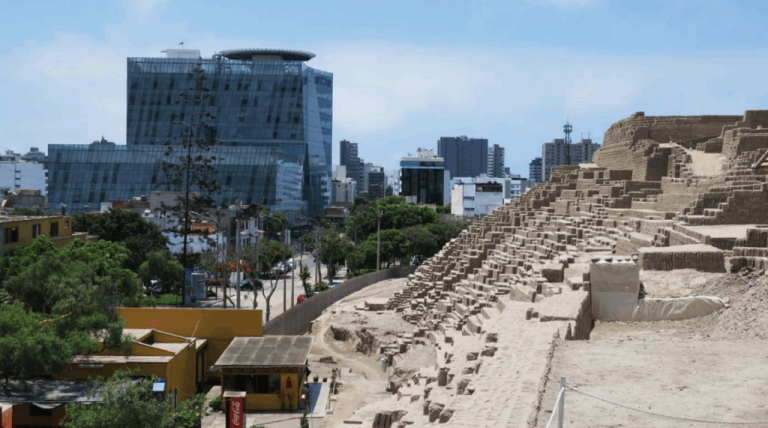

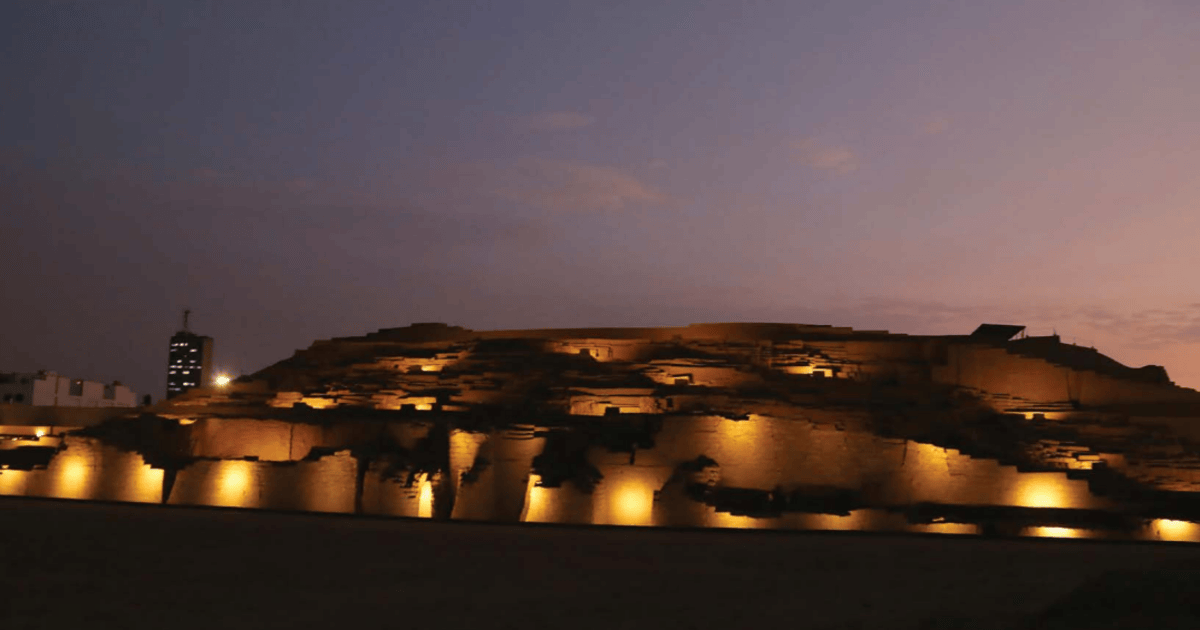
This pre-Hispanic pyramid, built by the Lima culture, which developed between 200 and 700 AD, was an important ceremonial and administrative center. What makes this place special is not only its antiquity but its location: surrounded by residential buildings, contemporary cafes, and boutiques. Huaca Pucllana seems like a mirage of the past amidst modernity. Its pyramidal structure, built with thousands of “booklet” shaped adobes, is another great testament to the architectural ingenuity of the pre-Hispanic civilizations that inhabited the central coast of Peru.
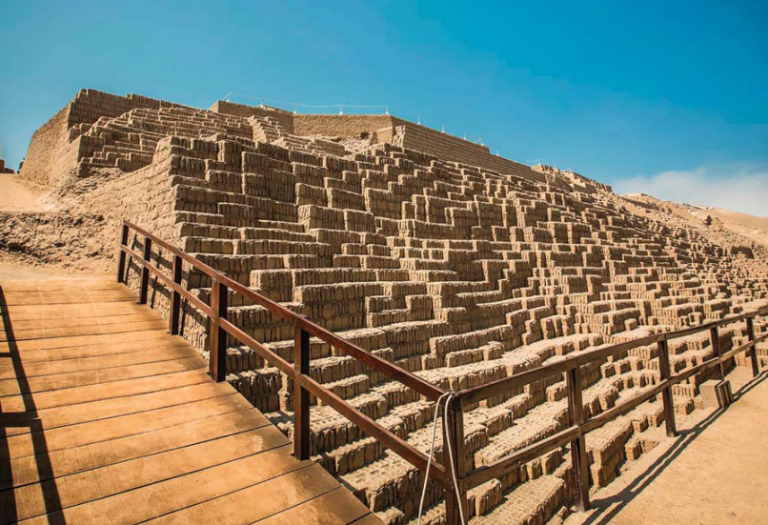
It is a stepped pyramid about 25 meters high, organized into patios, ramps, and enclosures that served as ritual, administrative, and political spaces. From there, the leaders of the Lima culture managed social order and communicated with the gods through ceremonies and offerings.
A MUSEUM THAT PRESERVES THE LEGACY
Visiting Huaca Pucllana is much more than contemplating an ancestral pyramid. The site has a museum that allows visitors to delve into the cultural contexts that gave life to this complex. Through ceramic pieces, textiles, tools, and skeletal remains found during excavations, part of Peru’s history is told, encompassing not only the Lima culture but also other cultures that reused the site, such as the Wari, Ichma, and even the Incas.
One of the most important discoveries was an intact mummy of a woman and two children, who were part of a funerary offering. This type of discovery highlights the ceremonial nature of the Huaca, as well as its importance as a place of symbolic power.
The guided tour (available in Spanish and English) is an enriching experience. Along the route, visitors can appreciate the different construction phases of the pyramid, the adobe construction techniques, and the agricultural areas where native plants such as corn, cotton, and chili peppers are grown, thus recreating the productive environment of the time.
Read also: Triple Cherry launches Harlequin Wilds 2
In addition, the museum organizes workshops and educational activities that aim to connect schoolchildren and visitors with the past in a didactic way. This makes the Huaca not only an archaeological monument but also a living space for learning.
GASTRONOMY AMONG MILLENNIAL WALLS
A detail that makes Huaca Pucllana even more unique is the harmonious integration of history and haute cuisine. Within the archaeological complex, with a direct view of the pyramid illuminated at night, is one of Lima’s most prestigious restaurants: the Huaca Pucllana restaurant.
This restaurant has successfully combined the cultural value of the environment with a first-class gastronomic offering, based on Peruvian ingredients and contemporary techniques. Dishes such as fresh fish ceviche, reinterpreted ají de gallina, or the classic lomo saltado are served with elegance and respect for tradition. Dining there is a multisensory experience that connects current flavors with the deepest origins of Peruvian culture.
Furthermore, it is an ideal place to celebrate special occasions or simply enjoy a different evening, enveloped by the mystery and majesty of an ancestral civilization. In few cities in the world can one experience a combination of archaeology, education, and high-level gastronomy in a single space.
In summary, Huaca Pucllana is much more than a tourist site: it is a meeting point between the past and the present, between the millenary legacy and the city of the future. Visiting it is understanding that Peru’s history is not buried, but continues to beat, even in the most unexpected corners of its capital.
Read also: Stretch Network announces major updates to Spin & Go tournaments, launching December 2nd