








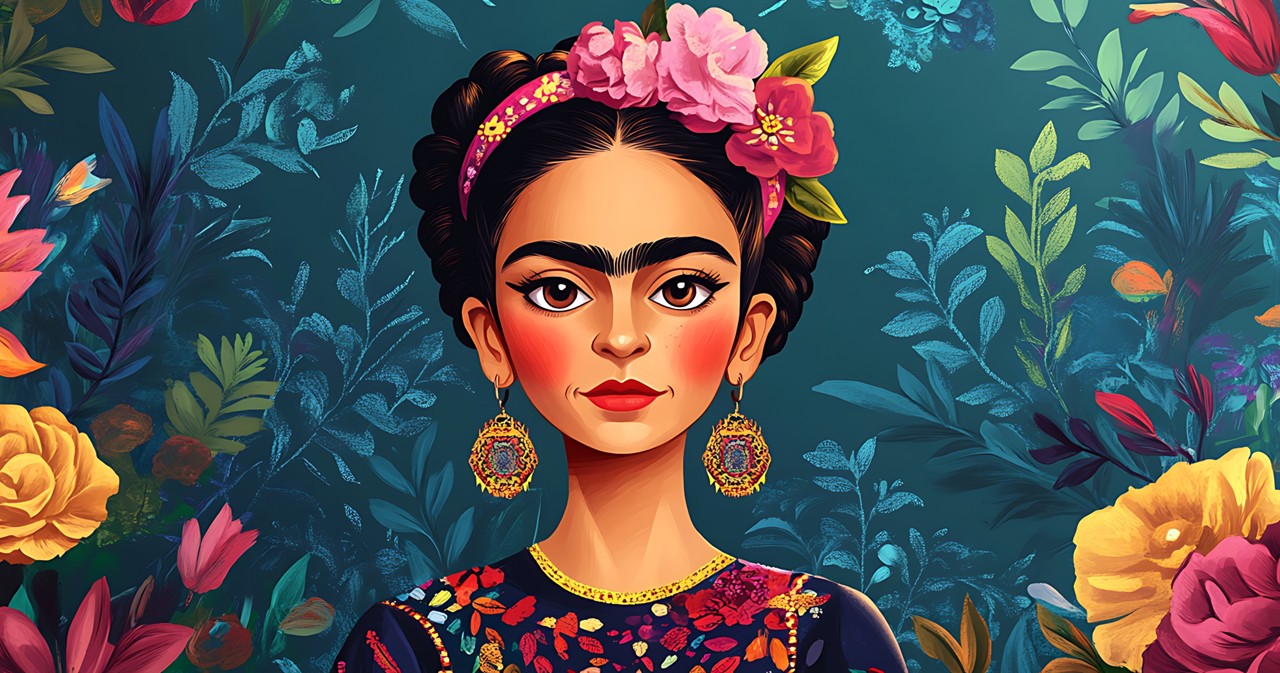
The life of Frida Kahlo was marked by physical and emotional pain, but it was precisely this suffering that inspired a profoundly introspective body of work. From her personal experience, Kahlo built a unique artistic voice that combines the intimate with the collective, marked by a firm political commitment and a deeply rooted Mexican identity. Her childhood home, her fractured body, her diaries, her Tehuana dresses, and her intensely-browed portraits are now part of the 20th century’s cultural imagination.
Read also: Alfama, the tourist and economic soul of Lisbon
Today, her legacy is projected on multiple levels. Not only in museums that house her work or tell her story, but also in everyday manifestations such as fashion, gastronomy, or urban art. The figure of Frida Kahlo continues to inhabit streets, shop windows, and kitchens in Mexico and around the world, keeping alive a personal aesthetic that has transcended styles and eras.
THE HOUSE OF CREATION
In Coyoacán lies the Casa Azul, Frida Kahlo’s former residence and now one of Mexico’s most visited cultural spaces. Each room reflects an aspect of her life: the studio where she painted while bedridden, the bed with a mirror where she imagined her self-portraits, the corsets that supported her body and which she turned into canvases. The cobalt blue walls, antique furniture, and personal objects transport the visitor into an intimate reality.
In the garden, surrounded by walls covered in bougainvillea and cacti, there is a serenity that contrasts with the intensity of her work. Here, one finds pieces of Mexican folk art, political symbols, and mementos shared with Diego Rivera. The tour of the Casa Azul is also a visual narrative that accounts for pain, resistance, and passion for Mexican art and culture.
FASHION AND LIVING AESTHETICS
For years, international designers have incorporated Frida’s style into collections that mix artisanal embroidery, vibrant colors, and traditional elements. Full skirts, embroidered blouses, and artificial flowers pay homage to her aesthetic without falling into literal imitation. Independent Mexican brands, on the other hand, have added pieces designed by local artisans as an extension of her legacy.
On runways, cultural festivals, and concept stores – both in Mexico City and in cities like Paris or Tokyo – Frida’s visual language continues to transform. Not only in fashion, but also in jewelry, accessories, and lifestyle products. Thanks to this, her image functions as a cross-border symbol: tradition enhanced by contemporary design.
FLAVORS THAT EVOKE FRIDA
In Coyoacán and surrounding areas, themed cafés and restaurants have incorporated allusions to Frida in their culinary offerings, such as the restaurant Frida. Dishes like chiles en nogada, intensely colored atoles, or desserts decorated with edible flowers refer to her iconography. In doing so, they seek to promote local products and artisanal Mexican cuisine.
Read also: MAAT de Lisboa: art, architecture and technology united in a contemporary icon
Some spaces have gone even further, combining the gastronomic experience with biographical accounts or temporary exhibitions about her work. Special menus on the anniversary of her birth or on historical dates link culinary tradition with cultural identity, creating a multisensory journey.
Perhaps one of the most representative gastronomic spaces inspired by the painter is Frida Kahlo – Casa Restaurante, located in San Pedro Garza García, Nuevo León. It is a culinary and cultural experience that explores different facets of the artist’s life, from her loves and roots to her travels. Each season, the menu revolves around a specific theme. The offering also includes a craft cocktail menu that evokes aromas, flavors, and colors associated with Frida’s personal universe.
MURALS THAT IMMORTALIZE HER IMAGE
Frida Kahlo lives not only within the walls of the Casa Azul but also on the walls of urban murals. In neighborhoods like Roma, Condesa, or Tlalpan in Mexico City, there are artistic interventions that transform her figure into a community symbol: colorful portraits, quotes from her diaries, or recreations of emblematic scenes.
This phenomenon is multiplied in cities around the world such as Berlin, São Paulo, or New York, where street artists reinterpret her image in various styles: from minimalist graffiti to large-scale pieces. These interventions serve a dual function: personal homage and a discourse of cultural inclusion, making Frida a contemporary figure.
INTERNATIONAL MUSEUMS
In addition to the Casa Azul, there are other museums in the world that have dedicated permanent or traveling exhibitions to Frida Kahlo. The Dolores Olmedo Museum in Mexico holds an extensive collection of her pieces, while institutions such as MoMA in New York, the Tate Modern, or the National Gallery of Victoria have hosted temporary exhibitions with original works or contemporary documentaries.
In parallel, Latin American art museums in cities like Miami, Toronto, or Madrid organize Mexican culture cycles where her work is exhibited alongside artisanal pieces, cinema, film photography, and historical testimonies. These exhibitions consolidate her role beyond Mexico, as a global reference in the artistic memory of the 20th century.
Read also: The return of Fremont Street